
Mark Brown
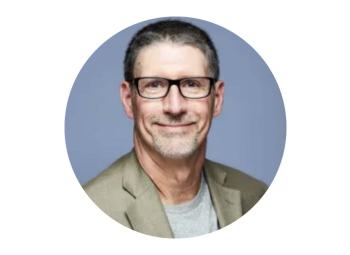
Mark M. Brown began his career in media and communications before a 23-day Outward Bound course sparked a decade-long journey with the Voyageur Outward Bound School. Starting as a van driver, he became an instructor leading canoe expeditions and wilderness programs across the U.S., Canada, and Mexico, eventually managing programs for at-risk youth and expanding Outward Bound’s regional reach.
A certified Co-Active Professional Coach (CPCC), Mark developed an experiential leadership model called Expeditionary Leadership, partnering with organizations across North America. After earning a master’s in business and entrepreneurship, he joined George Mason University’s Mason Enterprise Center, leading training programs for thousands of entrepreneurs and teaching courses for veterans and military personnel.
He later joined a 90-year-old family-owned company in New Hampshire, where he directed training, marketing, and communications during a nationally recognized cultural transformation. Following the release of his book, Outward Bound Lessons to Live a Life of Leadership, Mark moved to Hawai‘i, directing the Small Business Development Center for East Hawai‘i and serving as vice chair of the state’s largest charter school board.
In 2023, Mark joined Oregon State University’s College of Business and later transitioned to OSU Extension as Associate Director of 4-H Youth Development, where he oversees statewide programming, onboarding, and compliance. His work centers on youth development, experiential learning, and inclusive leadership.
Dr. Francisco Calderon
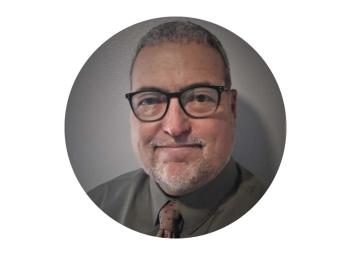
Dr. Francisco Calderón is the Director of the Columbia Basin Agricultural Research Center (CBARC) at Oregon State University and a leading soil scientist specializing in dryland agriculture. Originally from Puerto Rico, Dr. Calderón earned his Ph.D. in Crop and Soil Sciences from Michigan State University. Before joining OSU in 2021, he held research positions at UC Davis and the USDA Agricultural Research Service. With over 20 years of experience, his work focuses on soil health, carbon cycling, and sustainable farming practices in semi-arid regions. As CBARC Director, he leads a multidisciplinary team addressing key challenges in wheat production, water use, and climate resilience in the Pacific Northwest.
Sarah Contreras
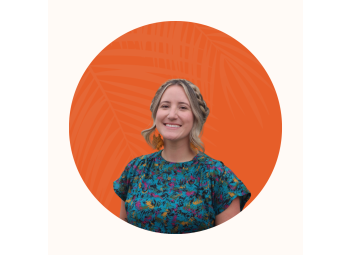
Sarah Contreras (who goes by Sarita) is the Northern Willamette Valley Master Food Preserver Outreach Coordinator. Originally from Tucson, Arizona, she relocated to Oregon in 2018 and quickly fell in love with the Pacific Northwest.
Sarah holds a Bachelor of Science in Health and Human Services with an emphasis in Public Health. Over the past decade, she has worked in higher education across two states and in multiple roles — from AmeriCorps Member to Program Coordinator — gaining extensive experience in community engagement and educational program management.
In her current role, Sarah coordinates a volunteer-based community education program, collaborating with colleagues, volunteers, and community partners to foster inclusive, relationship-centered learning opportunities that support lifelong well-being. Outside of work, she enjoys collecting vinyl records and running, and is currently training for her first half marathon.
Dr. Bryan Endress
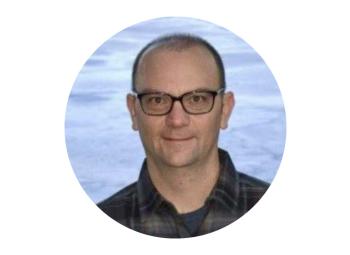
Bryan Endress serves as the Assistant Director & Associate Professor of the Eastern Oregon Agriculture Research Center – Union Experiment Station. His research focuses on the management, conservation, and stewardship of biocultural resources and the ecosystems in which they are found. Research is highly collaborative and conducted in partnership with a wide range of stakeholders, including landowners, resource users, government agencies, Tribes, non-governmental organizations, and universities both in the United States and abroad. Bryan’s work lies at the interface of basic and applied science and advances ecological principles while providing insight for sustainable use, stewardship, management, and restoration. He has published over 30 scientific publications and generated over $2.7 million in grant support. Prior to his current role, Bryan served as Rangeland Sciences Program Lead within the Department of Animal and Rangeland Sciences. Before joining Oregon State University, Bryan served as the Director of Applied Plant Ecology for the Zoological Society of San Diego for seven years, where he led a global conservation and research program. He holds a BA in Biology from Luther College, a MS in Forestry from the University of Illinois and a PhD from Miami University in Botany.
Felicia Olmeta Schult
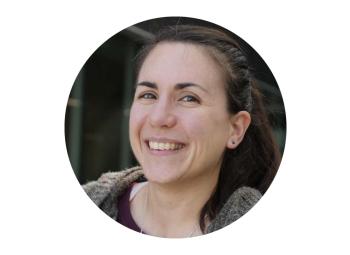
Felicia Olmeta Schult is the Oregon Sea Grant Extension Coastal Hazards Specialist. She works with community partners to increase the resilience of Oregon coastal communities to the impacts of natural hazards (e.g., coastal erosion, flooding, landslides, earthquakes, and tsunamis). Felicia joined the OSU Extension Service and Oregon Sea Grant in 2022, and is based in Newport, Oregon at the Lincoln County office. Felicia has a B.S. in Oceanography from Hawaii Pacific University, a M.A. in Marine Affairs from the University of Rhode Island, and a Ph.D. in Environmental and Natural Resource Sciences from Washington State University. She is originally from Corsica, a small French island in the Mediterranean Sea.
William Price
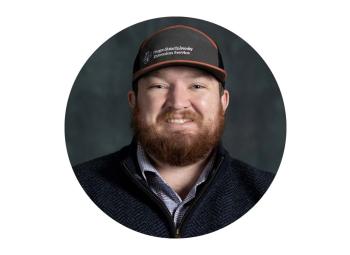
Will Price is an Assistant Professor of Practice in the Department of Animal & Rangeland Sciences at OSU. He serves as the Livestock, Rangeland & Forages Field Faculty in Baker and Union Counties. Will's work focuses on addressing challenges faced by livestock and forage producers through applied, collaborative research and extension programming. Will strives to provide his stakeholders with practical, effective methods to overcome their challenges that fit within or complement existing production practices. A native of Eastern Oregon, he has spent his entire life in the sagebrush ecosystem. He holds a BS from Utah State University, an MS from the University of Idaho and is completing a Ph.D. from Oregon State in fall 2025. While completing his studies at Utah State, Will served in the U.S. Navy Reserve as a hospital corpsman. Outside of work Will enjoys fishing, hunting, and spending time with his wife and dog, a basset hound named Maple.
Diana Reyes
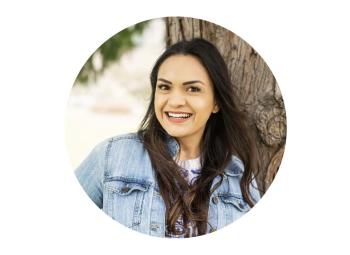
As a first-generation immigrant, education has always been deeply important to Diana Reyes. She earned her master’s degree at 20 and discovered how much she loved working in higher education. From the very beginning, she was drawn to communications, marketing, and graphic design because they allow her to connect people with information and opportunities that make a difference.
Diana joined OSU Extension Communications in January 2022, and it has been a truly rewarding experience. Every day, she collaborates with passionate colleagues, learns about the incredible work happening across Extension, and finds creative ways to share that work with Oregonians. Being bilingual allows her to help make Extension’s resources more accessible to Oregon’s communities, which she cares deeply about. She also enjoys exploring new tools and approaches that strengthen Extension’s digital outreach and make messages more meaningful.
What Diana loves most about her work is the chance to combine creativity with impact. Whether building social media campaigns, designing graphics, or telling stories that highlight the value of Extension, she feels proud knowing her work helps people connect, learn, and grow.
Outside of work, Diana is a mom to a lively 4-year-old son and two spirited dogs who keep life busy and full of joy. They remind her every day why building stronger, more connected communities matters so much.
Karen Taylor
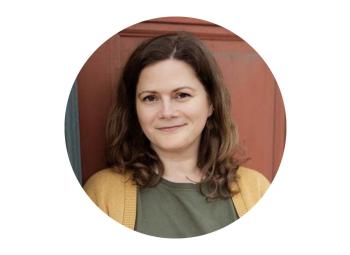
Karen Taylor is the lead Instructional Designer for OSU Professional and Continuing Education (PACE), specializing in creating engaging and effective online education for non-credit programs and workforce training. Karen’s expertise lies in applying best practices in adult learning theory to online learning using the highest quality educational technologies in the industry. Karen is also an instructor for the OSU College of Education’s non-credit programs, teaching courses on the most widely-used eLearning authoring tools, Articulate Storyline and Rise. Karen is a 2017 graduate of OSU’s Adult and Higher Education program, holding a master’s in Adult Education. She works remotely from her home in Pendleton, where she is active in the leadership of her local community theater.
Dr. Marcia Walker
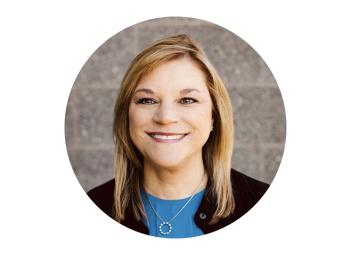
Dr. Walker joined the OSU Food Innovation Center in September 2023 and was charged to bring relevant food industry experience to the center. Marcia has extensive food safety and product development/innovation experience spanning over 20 years and a well-known speaker and expert in product innovation and new technology commercialization. With experience working for Tofurky, PepsiCo supporting the Naked Emerging Brands innovation team and Starbucks/Evolution Fresh she has been a pioneer in advancing new to the market products, food safety and emerging technologies. Walker helped to pioneer high pressure processing at Fresherized Foods. She oversaw the development and commercialization of avocado, guacamole, fruit, juice and meat items as well as being instrumental in the branding of Wholly Guacamole. Prior, Dr. Walker was at Oregon State University and was part of a Dept. of Defense grant that included improving combat rations using novel technologies and was critical in the adoption of HPP as a now widely used processing technology.
Marcia received her B.S. in Biology from Gonzaga University, M.S in Food Science and Nutrition from Washington State University and a Ph.D. in Food Science from Oregon State University.
Megan Wickersham
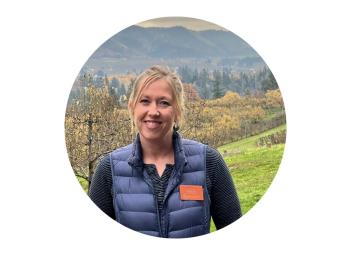
Megan Wickersham is the Outreach Coordinator for the Hood River County Master Gardener program. She grew up in the Columbia Gorge, graduating from Washington State University with a Bachelor of Arts in Education. Megan started her teaching career on the Washington coast, transitioning into grant coordination in early childhood and community outreach. During this time, her son was born, she finished her Master of Arts in Education and established the Pacific County Early Learning Coalition.
After her twins were born, Megan moved back to the Columbia Gorge to teach, develop a school garden, and renew five acres of field, forest, and abandoned orchard with her family. Megan became a Master Gardener in 2018 and realized that this Extension program combined three of her passions: gardening, education, and community outreach. Joining the Extension faculty in 2019, she was challenged to rebuild and restructure the program after pandemic closures. Alongside a vibrant group of volunteers, Megan has focused her time on strengthening volunteer engagement and expanding community education and service projects.
In her precious free time, you can find her in the garden, swimming laps, reading a pile of books, and trying to keep up with teenagers.
Dr. Steve Young
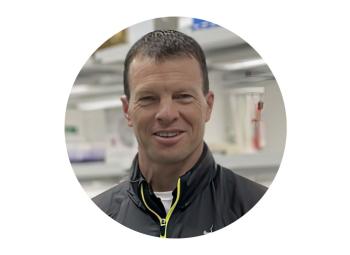
Dr. Steven Young joined Oregon State University this past June as director of the North Willamette Research and Extension Center (NWREC) and associate professor in the Department of Horticulture. Before joining OSU, he served as a national program leader for the USDA Agricultural Research Service (ARS) in Beltsville, Maryland. He holds a Ph.D. from the University of California, Davis, an M.S. from the University of Idaho, and a B.S. in horticulture from Washington State University.
Steve’s roots trace back to the dry side of Washington, where his curiosity about the natural world began with searching for scorpions under rocks and identifying the grasses and trees along the Naches River. His love for plants led him to study horticulture, which eventually evolved into a lifelong fascination with plants--specifically weeds--and their remarkable ability to thrive in challenging environments. From undergrad work in New Zealand orchards to research fields in Washington to southern Idaho for graduate school at U of I, Steve’s career has centered on understanding how plants adapt and persist under extremes—a passion that continues to shape his work today.